Wednesday, 14 November 2018

Moringa leaves dal


After a long break, I am finally back. Due to the festive season, I got tied up with family and friends, busy with Dussehra and Diwali celebrations. I prepared many dishes during those days, but did not find time to upload them, making me literally inactive in blogging.
Today I am sharing Moringa leaves dal recipe with all of you. Again, this was taught by my mother last month during the festivals.

Moringa leaves / Drumstick leaves are highly nutritious being rich in Vitamin A and Iron. These leaves have a lot of medicinal benefits. The Moringa leaves are used in a variety of dishes.
Moringa leaves dal is one such recipe which can be quickly prepared and make a great combination for rice. Here I am using Aarhar / Toor Dal (Split Pigeon Peas) for preparing this dal. However, this can be cooked along with only Moong dal (Split Green Gram) or with a mix of Aarhar and Moong dal as well. This simple Moringa leaves dal can be prepared using minimum ingredients that are readily available in any kitchen.

Bunch of Moringa leaves


INGREDIENTS :

(1) 3 cups of Moringa leaves
(2) 250 gms of Aarhar / Toor Dal (Split Pigeon Peas)
(3) 1 large Tomato, coarsely chopped
(4) Half teaspoon of Turmeric powder
(5) Salt to taste

For Tadka :

(1) 1 large Onion finely chopped
(2) 1 inch sized Ginger / Adrak, finely chopped 
(3) 8-10 Garlic buds / Lehsun, finely chopped
(4) 3/4 teaspoon of Mustard seeds / Rai
(5) 3/4 teaspoon of Cumin seeds / Jeera
(6) 8-10 Curry leaves / Kadi patta
(7) 3 whole Red Chillies dry
(8) 1/4 teaspoon of Asafoetida / Hing
(9) Ghee or Cooking oil

All ingredients gathered together 

METHOD :

(1) Remove the Moringa leaves from the twigs and collect them in a colander. Once all the leaves are collected, use 3 cups of Moringa leaves out of them for making this dal. Rinse the leaves in a colander thoroughly under running tap water. We need not chop the leaves. 

Moringa leaves, cleaned

(2) Next, wash 250 gms of Aarhar / Toor dal in a utensil under running tap water a couple of times. Drain the water completely and take the rinsed dal in a pressure cooker.

Washed Aarhar / Toor dal

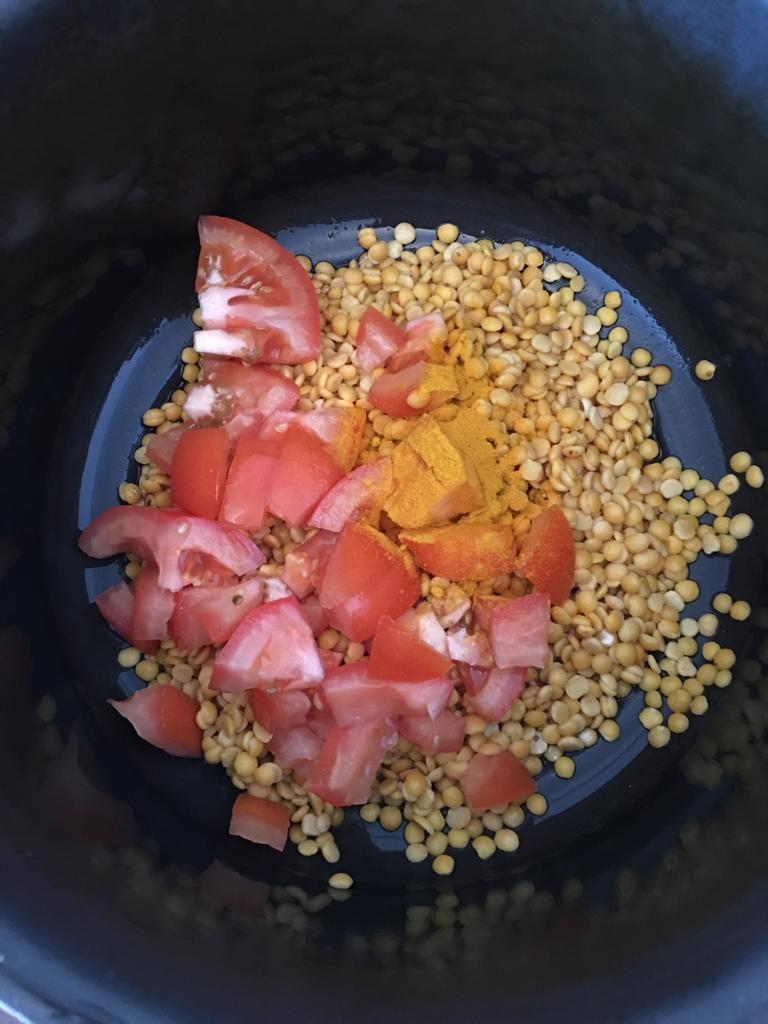
Add chopped Tomato, Turmeric powder, Moringa leaves, Salt to taste, all one by one. Finally add 800 ml of water. Cover the lid of the pressure cooker and pressure cook the dal until 3-4 whistles. Then, wait for the pressure of the cooker to release on its own. Once this happens, open the lid of the pressure cooker and check the cooked dal. You will find it cooked, soft and mushy. If water has dried up and the dal is too thick, add water to adjust the consistency and reheat the dal on a low flame for five minutes without closing the lid. 

Add chopped Tomatoes

Add Turmeric powder 
Add Moringa leaves

Add Salt as required

Add 800 ml of water to the ingredients, cover the lid of the pressure cooker
 and cook until 4 whistles

Once the pressure is released, open the lid of the pressure cooker 

Add water to adjust the consistency of the dal

(3) In the meantime, we prepare the tempering / tadka.
Heat 2 tablespoon of ghee or if you take cooking oil instead of ghee then take 4 tablespoon of cooking oil in a tempering ladle / pan.
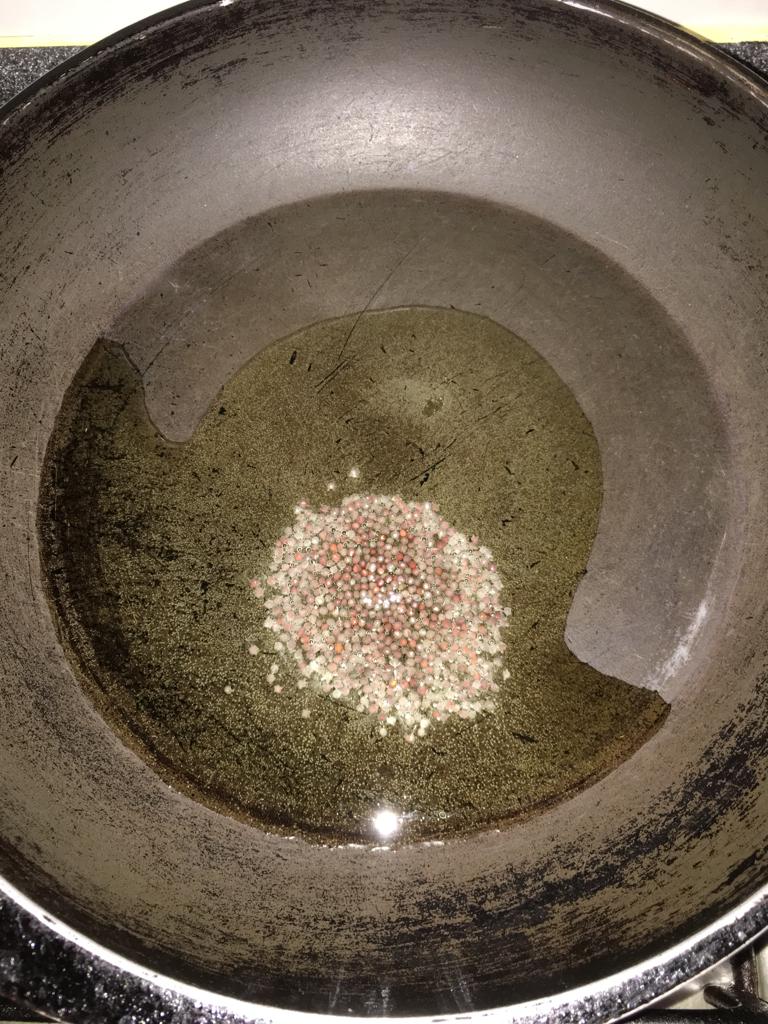
Add 3/4 teaspoon of Mustard seeds and allow them to splutter. While Mustard seeds splutter, add 3/4 teaspoon of Cumin seeds. Immediately add finely chopped Garlic and Ginger together. Saute the mixture till the Cumin seeds change colour and the raw smell of Garlic and Ginger goes away. At this stage add 3 whole dry Red Chillies, Curry leaves and Asafoetida / Hing powder. Saute for 5-8 seconds and then add finely chopped Onions. Saute till the Onion changes to golden brown colour. Then turn off the gas flame. Our tadka / tempering is ready.

Heat cooking oil or ghee in a pan

Add Mustard seeds

Add Cumin seeds

Add chopped garlic and ginger

Saute till colour of the Cumin seeds changes and  raw smell of garlic and ginger goes away 

Add 3 dry whole Red Chillies and Curry leaves

Add Asafoetida 
Add chopped Onions

Tempering / Tadka ready

(4) Add the tadka mixture to the cooked Moringa leaves dal.


Mix well.
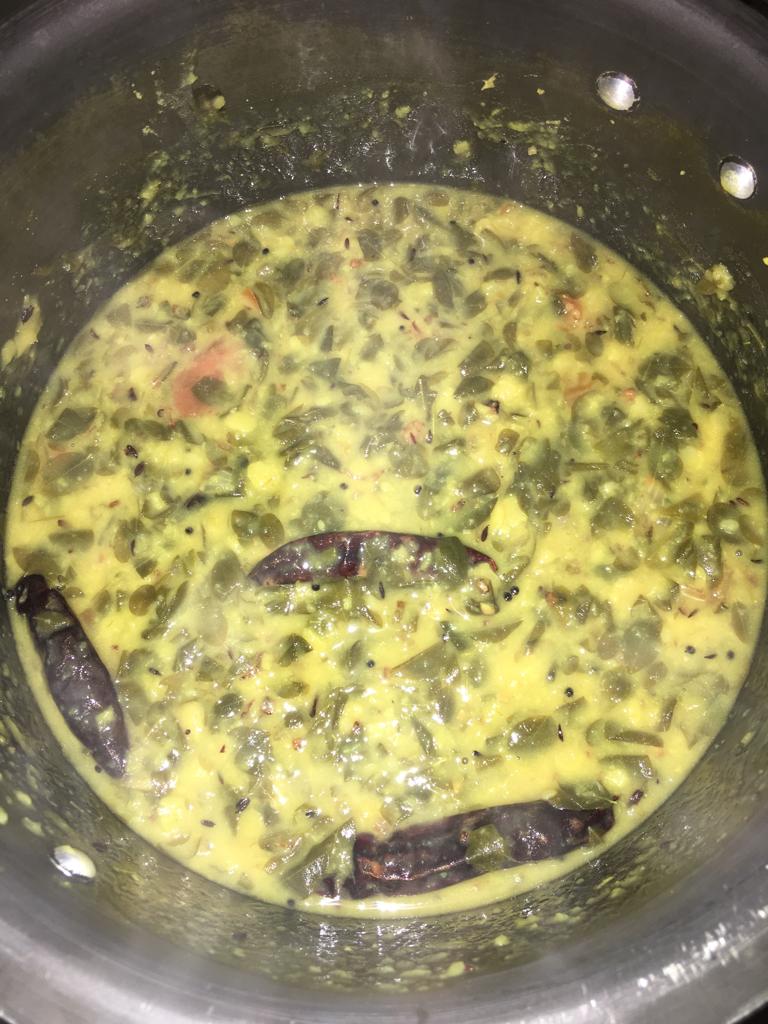

(5) Discard the red whole chillies now.

(6) Moringa leaves dal is ready.
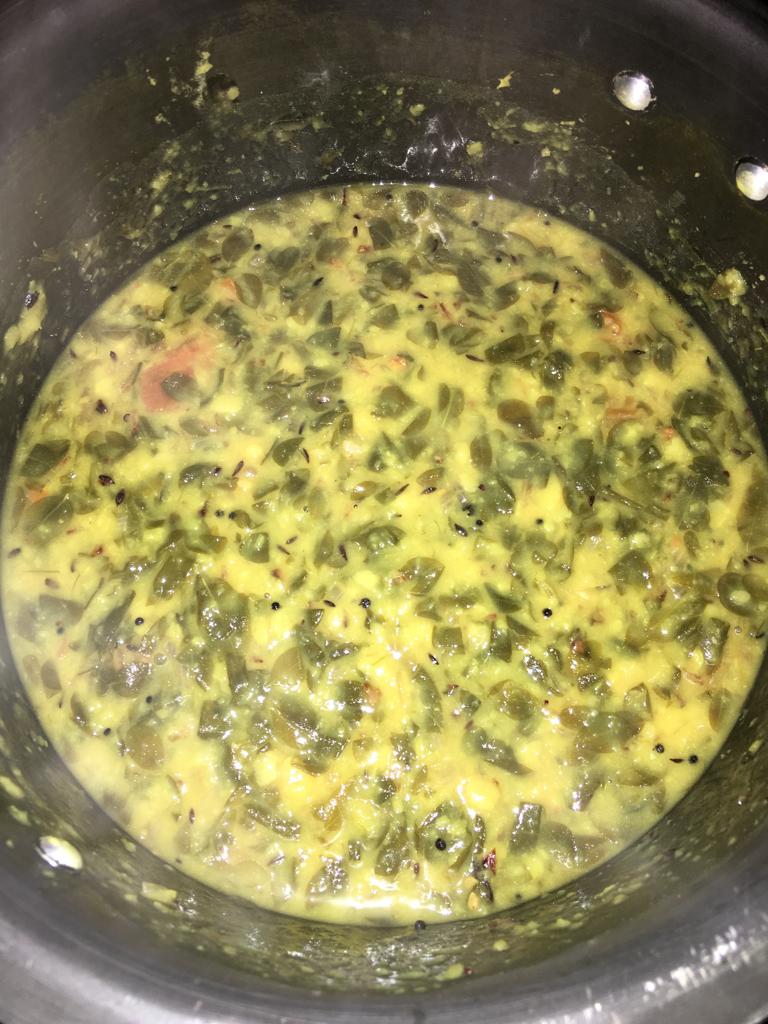

(7) Transfer the dal to a serving bowl.


(8) Serve the piping hot nutritious Moringa leaves dal with rice and any dry vegetable side dish.

Tuesday, 2 October 2018

Mumbai Pav bhaji


Pav Bhaji is a street food from Mumbai, hugely popular all over India. Pav means bread rolls. Bhaji in Marathi language means Vegetable based dish.


Since both the Pav and bhaji are served together, hence the name Pav bhaji. We add a specific masala called Pav Bhaji masala to it too to get that special flavour. Pav bhaji masala can be home made or store brought. It is easily available all over India in any grocery store.

To make the bhaji of Pav bhaji, Onions, Tomatoes and ginger garlic paste are sautéed in butter first. To that boiled and mashed vegetables are added followed by Pav bhaji masala. The bhaji is then simmered for few minutes to be served later with buttered and slightly toasted pav.

In the streets or in the restaurants, pav bhaji is made on a large flat tawa (griddle). At home you can make pav bhaji in a kadhai / wok or in a  frying pan.

Pav bhaji has a bright orangish red colour. When you make pav bhaji at home, you won’t get that jet red colour that you see in streets and in restaurants as some of them add artificial food colours to get that deep red colour. I recommend not to use food colour and keep it natural for your good health. In case you like to get that deep red colour, you may use byadgi red chillies while you prepare pav bhaji. Soak few byadgi red chillies in warm water for 20 minutes and grind them into a smooth paste using very little amount of water. Add this chilli paste in the pav bhaji and you will get the desired red colour.

The vegetables that are usually added to Pav bhaji are Cauliflower, Potatoes, Carrots, Beans, Peas and Capsicum. You can make Pav bhaji with any of these veggies combination, but do make sure that you add Capsicum (green bell pepper) as it gives a really good taste in Pav bhaji.

The vegetable bhaji is served with pav. Cubes of butter are also topped on the hot steaming bhaji while serving and coriander leaves are used as garnish. Chopped Onions and lemon wedges are also served as an accompaniment. The lemon juice has to be drizzled on the Pav bhaji and mixed and eaten with pav.

INGREDIENTS :

(1) 3 medium sized Potatoes, boiled, peeled and chopped
(2) 1 to 1.25 cups of chopped Cauliflower
(3) 1 cup chopped Carrot
(4) 1 cup green Peas, fresh or frozen
(5) 1 medium sized Capsicum (green bell pepper) finely chopped
(6) 1 medium sized Onion, finely chopped
(7) 8 medium sized Garlic cloves
(8) 1.5 inch sized Ginger
(9) 1 large Tomato, finely chopped
(10) 1 teaspoon of Coriander / Dhaniya powder
(11) Half teaspoon of Cumin / Jeera powder
(12) 4 teaspoons of Pav bhaji masala (I used RASOI brand of Pav bhaji masala). Add as per taste required.
(13) 1 teaspoon of Kashmiri lal mirch powder or else a paste of Byadgi Red Chillies. The latter is preferred as it gives a deep red colour to the Pav bhaji.
(14) Water for cooking
(15) Salt as per taste required
(16) Pavs for serving with the bhaji
(17) Finely chopped Onion as accompaniment
(18) Lemon wedges as accompaniment
(19) Coriander leaves as garnish
(20) Cooking oil 
(21) Amul butter


Course : Brunch, Snacks
Cuisine : Mumbai Street food / Indian
Serves : 5-6 persons
Time : 1 hour

METHOD :

Preparing Vegetable bhaji :

(1) Take 3 medium sized Potatoes in a pressure cooker. Add sufficient water to immerse the Potatoes in it. I added 3 glasses of water. Close the lid of the pressure cooker and cook the Potatoes until 4 whistles. Turn off the gas stove and allow the pressure of the cooker to release on its own. Then open the lid of the pressure cooker. Drain the hot water away from the pressure cooker and pour some cold water in it. Allow the Potatoes to cool down. Then take the Potatoes and peel them and mash them as shown.


(2) Rinse Cauliflower, Carrots, Peas and Capsicum. Now, in a wide utensil, take 1 to 1.25 cups of chopped Cauliflower, 1 cup chopped Carrot, 1 cup green Peas fresh or frozen), 1 medium sized Capsicum (green bell pepper) finely chopped. Add 3 glasses of water and 1 teaspoon of Salt to it. Cook the veggies until they are soft and cooked. Once cooked, turn off the gas flame. Allow them to cool down. Once cooled, take a masher and mash the veggies as shown. Keep the mashed Veggies aside.


(3) Peel an Onion, 1.25 inch sized ginger and 8 cloves of garlic. Chop them and take them in a blending jar of a mixer grinder. Grind them along with very little water into a smooth paste as shown.


(4) Soak few byadgi red chillies in warm water for 20 minutes and grind them into a smooth paste using very little amount of water. Here is the chilli paste.


(5) Rinse and finely chop one Tomato as shown.


(6) Here we have gathered all the ingredients required for preparing the bhaji - Mashed veggies, mashed Potatoes, chopped Tomatoes, Onion ginger garlic paste and Byadgi red chilli paste.


(7) Now we proceed to prepare the bhaji. Melt 4 tablespoons of butter in a  Kadhai or take 4 tablespoons of cooking oil. 


(8) Add the Onion Ginger Garlic paste to the warm oil or butter. Mix well and sauté till the raw smell of it goes away.


(9) Add chopped Tomatoes and sauté well till they turn mushy.


(10) Now, add the mashed veggies (Cauliflower, Capsicum, Carrots, Peas). 
Mix well.


(11) Add the mashed Potatoes. Mix well.


(12) Add the Cumin powder, Coriander powder and Pav bhaji masala in measures as given in the ingredients list.

Mix well.


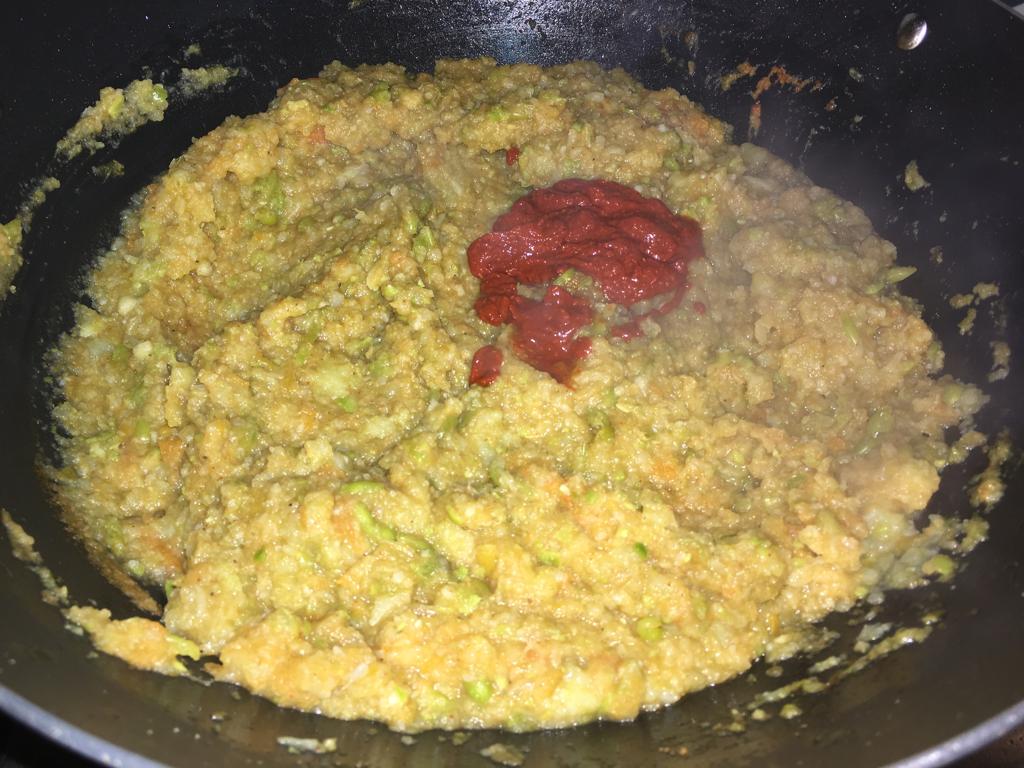
(13) Add the Byadgi red chilli paste now.

Mix well.


(14) Add one glass of water. Add Salt to taste and mix well. Note that we had added salt while cooking the veggies so add little salt accordingly.


(15) Add 2 tablespoons of butter again. Simmer for 8 - 10 minutes and stir constantly so that the bhaji does not stick to the kadhai / wok. If the bhaji becomes dry, add more water and achieve the desired consistency (Neither too thick nor too thin).


(16)  Add handful of chopped Coriander leaves. Mix well and simmer for 2 minutes. Finally turn off the gas flame.


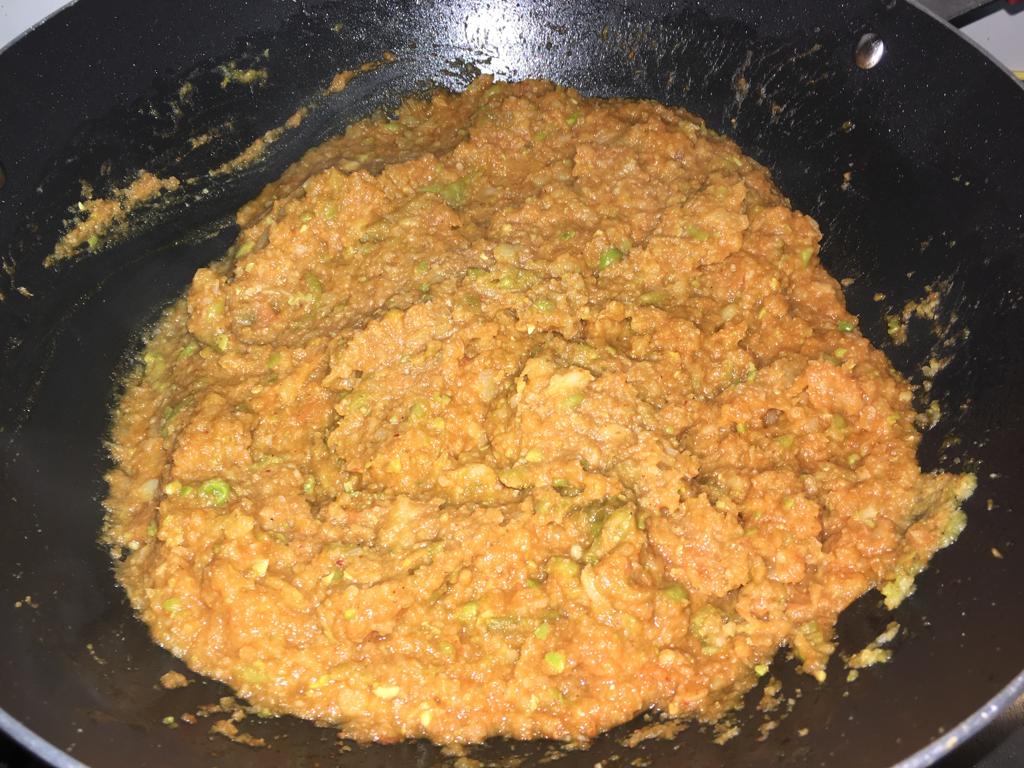
(17) Our Pav bhaji is ready.


(18) Transfer the Pav bhaji into a serving bowl.


Frying Pav for bhaji :

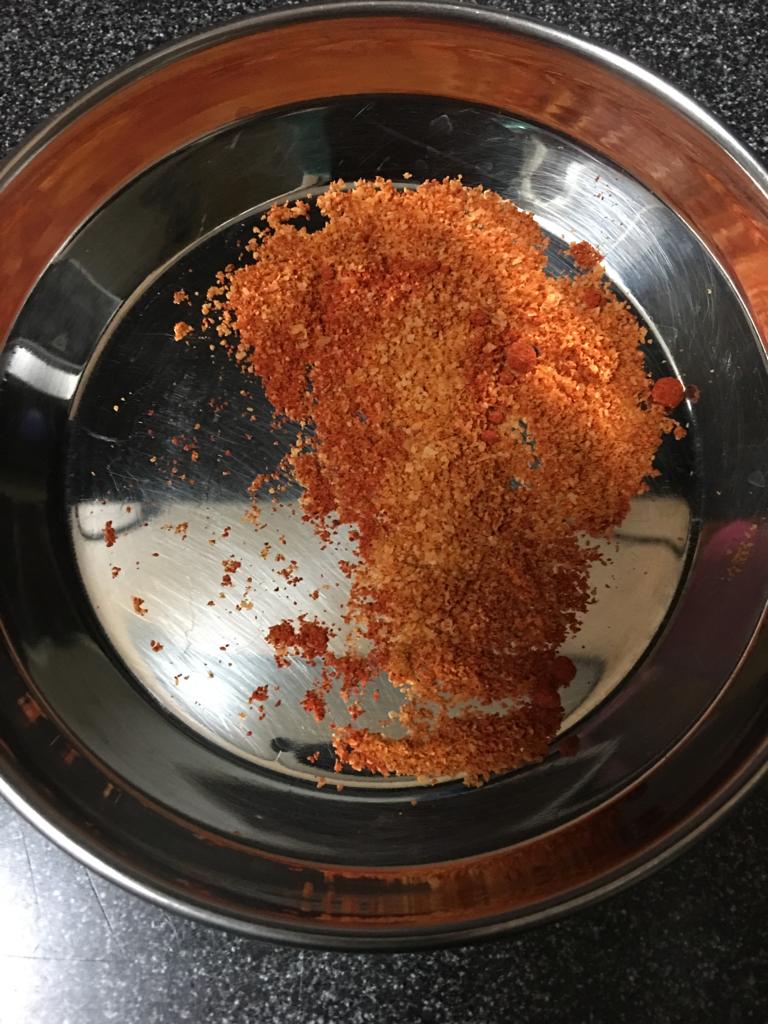
(1) On a small plate take one teaspoon of kashmiri red chilli powder and 1 teaspoon of pav bhaji masala and mix well.


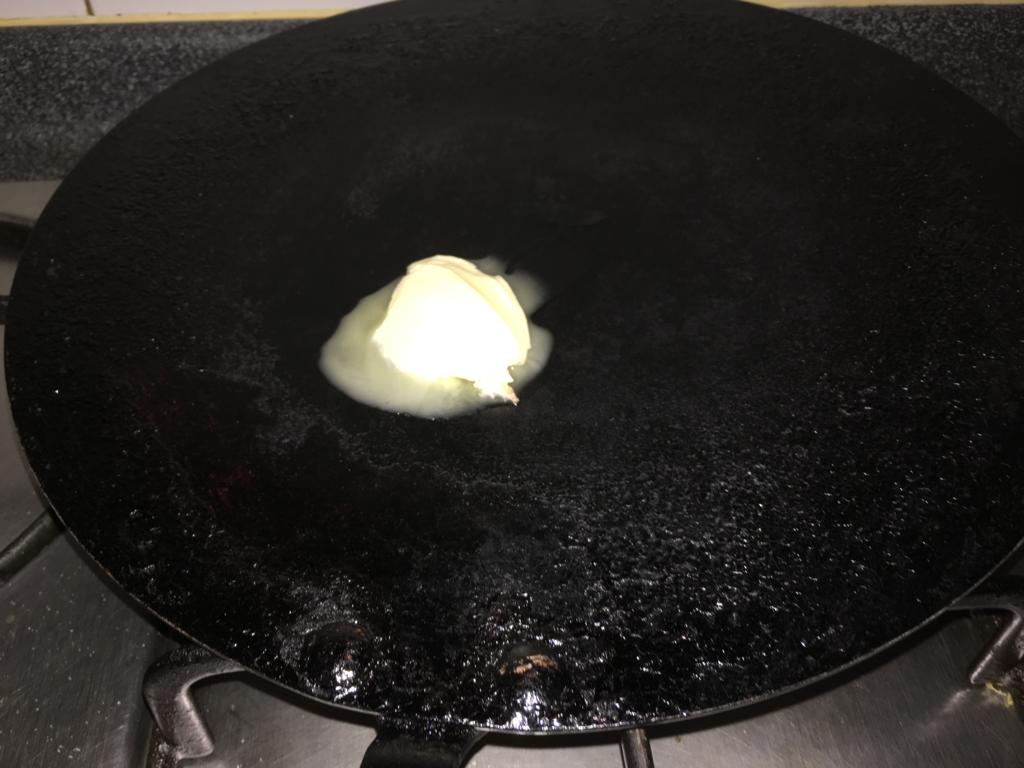
(2) On a low flame, heat a shallow frying pan or a Tawa.  Add a tablespoon of butter to the pan. 


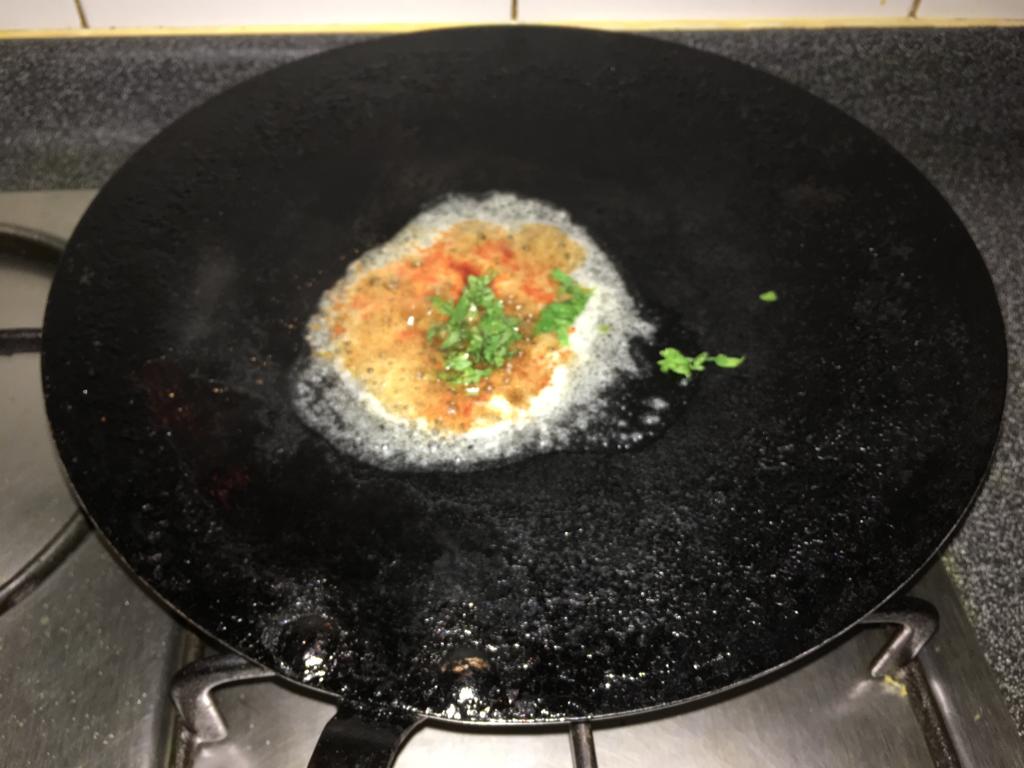
(3) Once the butter begins to melt, add two pinch of the chilli powder we prepared in step 1. Mix well with butter. Then sprinkle little chopped Coriander leaves over it.


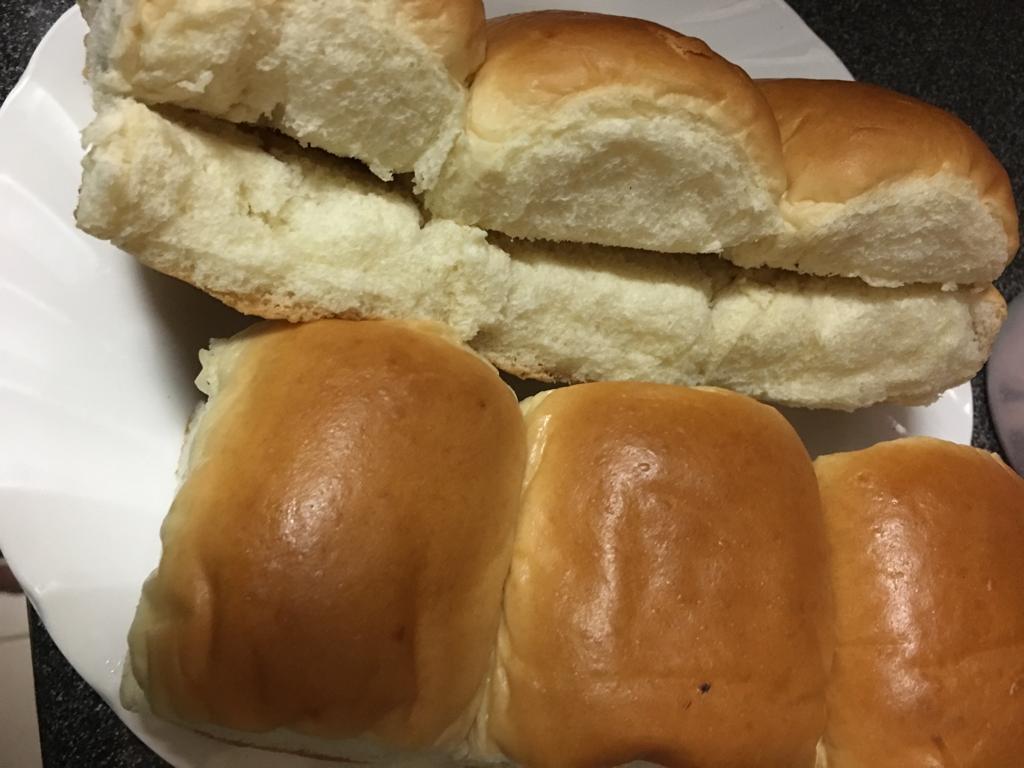
(4) Slit the pav as shown. 


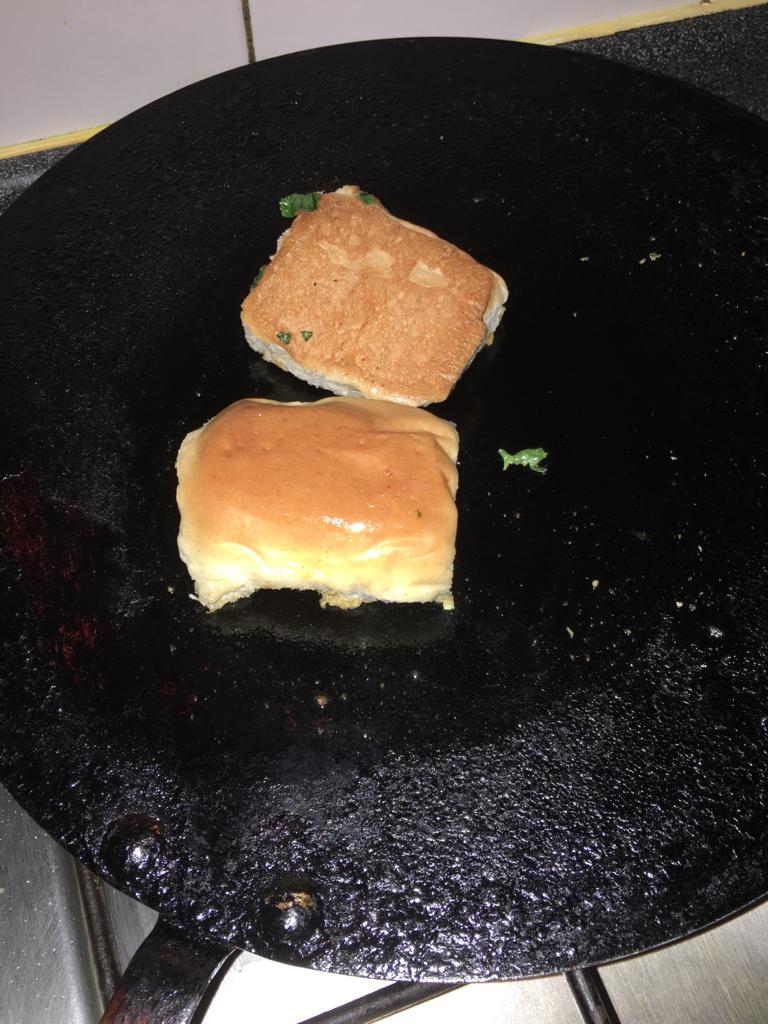
(5) Place the pav on the butter. Rotate the pav all over the melted butter so that the pav absorbs the butter.


(6) Now turn over the pav and rotate the pav on the tawa so that the second side also absorbs the butter. Add more butter if required.


(7) Roast the pav on both sides till golden yellow colour reached or as desired. Transfer them on a  serving plate and keep aside.

(8) Roast as many pav as you need in this way.


Fried pavs ready.


Serving Pav bhaji :

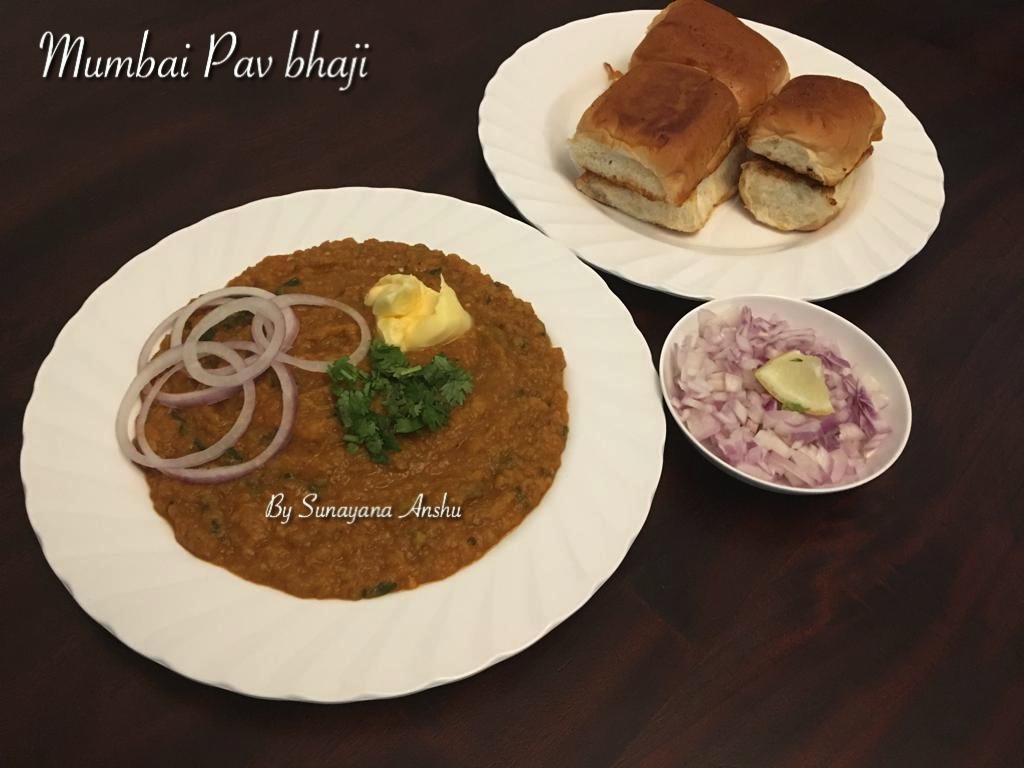
(1) Now take the Pav bhaji in a serving plate as shown. Top it with a spoon of butter. Garnish with Onion rings and chopped Coriander leaves.


(2) In a bowl, take finely chopped Onion and a lemon wedge.


(3) In another plate take roasted Pav.


(4) Squeeze the lemon juice on the bhaji while eating.