Wednesday, 14 February 2018

Neer Dosa


Neer dosa is a soft, thin, lacy crepes made with rice batter. It is a popular and most loved variety of dosa from the Karnataka Cuisine. Neer means water in Kannada and the word Neer Dosa translates to Water Dosa. These dosas are called water dosa as the batter is watery and not thick like the usual dosa batter.

While preparing Neer Dosa, fermentation is not required and therefore it is less time consuming.


Neer Dosa can be served with coconut chutney and sambar. It can also be served with any veg sagu or veg korma.


INGREDIENTS :

(1) 250 gms of regular rice 
(2) 3 pinch of Fenugreek seeds (Methi dana)
(3) 2-3 tablespoons of grated coconut
(4) 450 ml of water for the batter.
(5) Water for soaking
(6) Oil for making dosas

(7) Salt as required


Below are the pictures of ingredients taken.


250 gms of rice

3 pinch of fenugreek seeds
Cuisine : South Indian
Serves : 3-4 persons
Time required : 3-4 hours for soaking rice, 5-10 minutes for grinding soaked rice, then can be made into dosas immediately.

TIPS TO GET THE DOSA RIGHT

(1) The batter should be of watery consistency, thin and flowing and not too thick. When the batter is of this watery consistency, then you will get thin and lacy dosas. If not it means that the batter is thick and you will have to thin it by adding more water.
(2) Thick batter will give rise to cracks in the dosas, so make sure that the batter is not too thick.
(3) The batter should not be too thin as that will cause the dosas to break while lifting. In this case, add some rice flour to thicken the batter.
(4) Heat the pan or tawa very well, grease with oil (so that the dosa doesn’t stick to the pan) before you pour the batter to make the dosas.
(5) Stir the batter very well with the ladle before pouring the batter on the pan.
(6) Add 2-3 tablespoon of freshly grated coconut while grinding the batter.

METHOD :


MAKING NEER DOSA BATTER:

(1) Rinse and soak 250 gms of rice and 3 pinch of Fenugreek seeds (Methi dana) in water for 3 -4 hours.


(2) Drain the soaked rice and Fenugreek seeds and put them in a mixer grinder jar.


(3) Add 2-3 tablespoons of grated coconut to it.
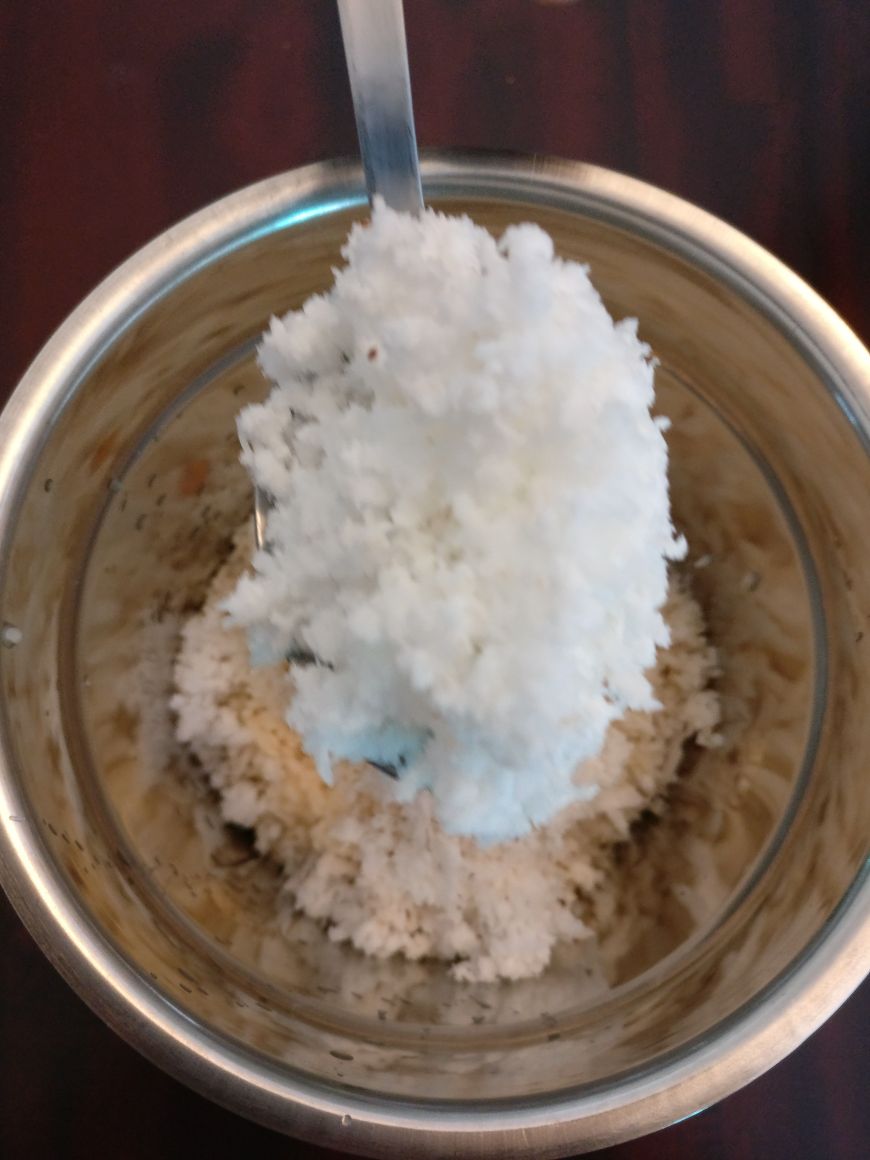


(4) Add 150 ml of water and grind the rice with coconut to get a smooth batter. If you add all the water at once, you will not be able to grind the rice well, so we added only 150 ml of water.


(5) Add 100 ml of water again and salt to taste. Then grind again. Once a smooth batter is formed, transfer it to another large utensil.


(6) Add 200 ml of water again to the batter and mix well.
I added a total of 450 ml of water to 250 gms of rice taken to form a batter. The amount of water depends on the quality and kind of rice. 


(7) Once the batter is ready, you can start preparing the dosas and fermentation is not required.

(8) Batter for neer dosa is ready.


MAKING NEER DOSA ON  A PAN

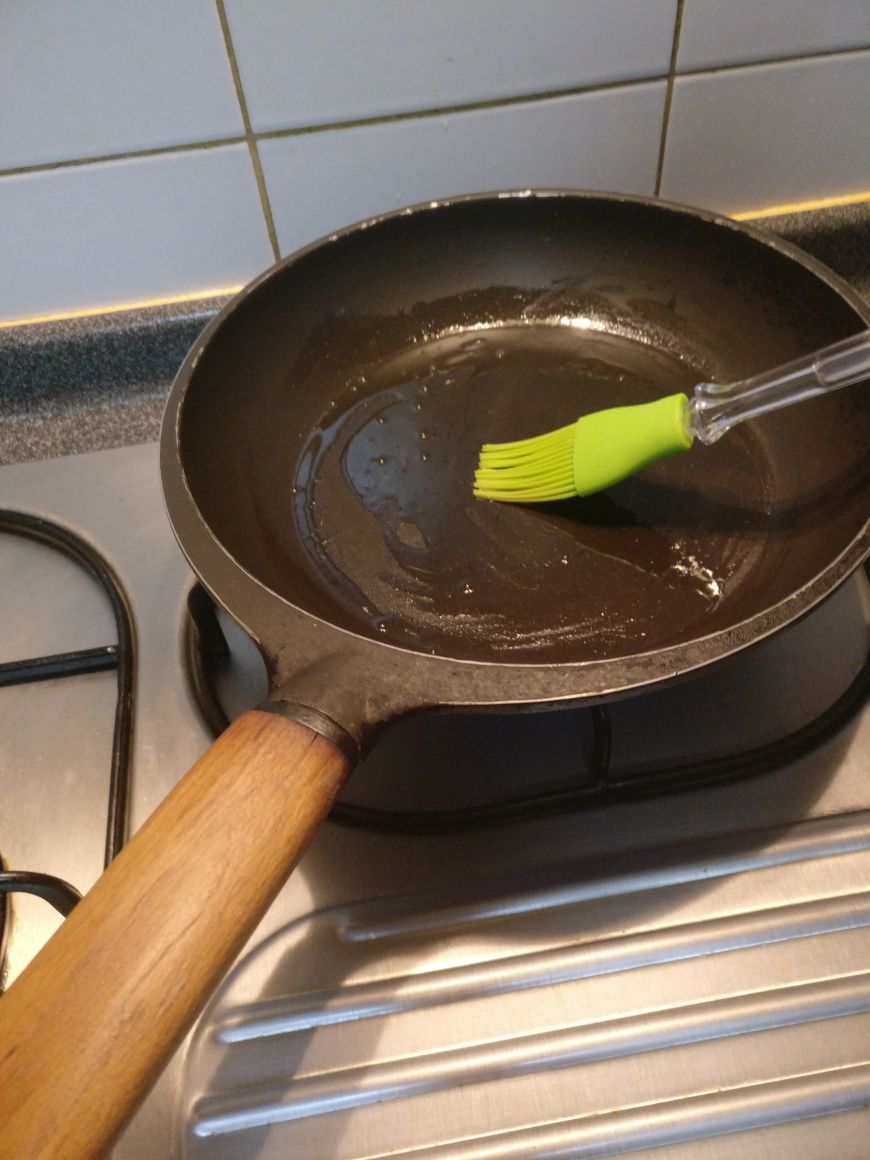
(1) Heat a cast iron pan or a non stick pan. Drizzle half table spoon of oil. Spread the oil using a brush.


(2) Stir the batter in the utensil very well and take a  ladleful of batter and pour the batter on the pan moving from outwards to inside as shown in the video. Fill all the gaps with the batter.
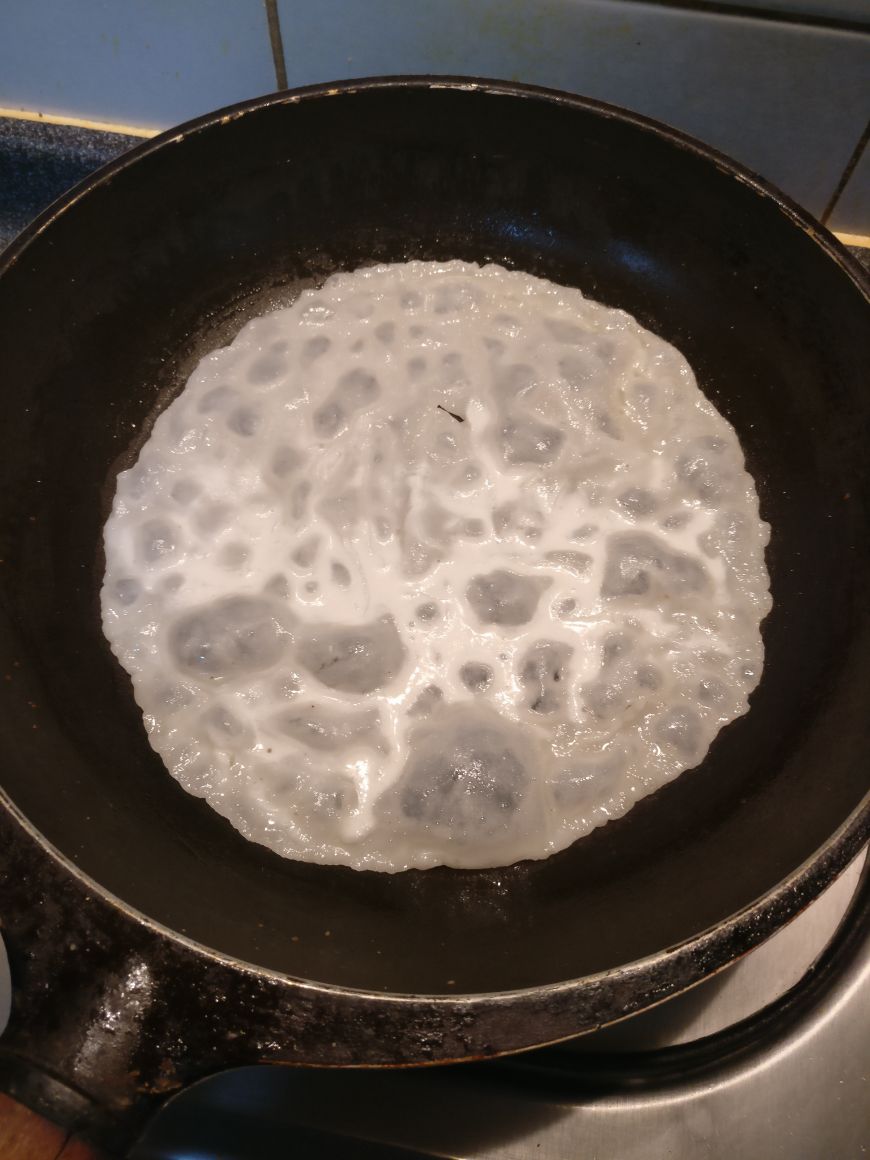

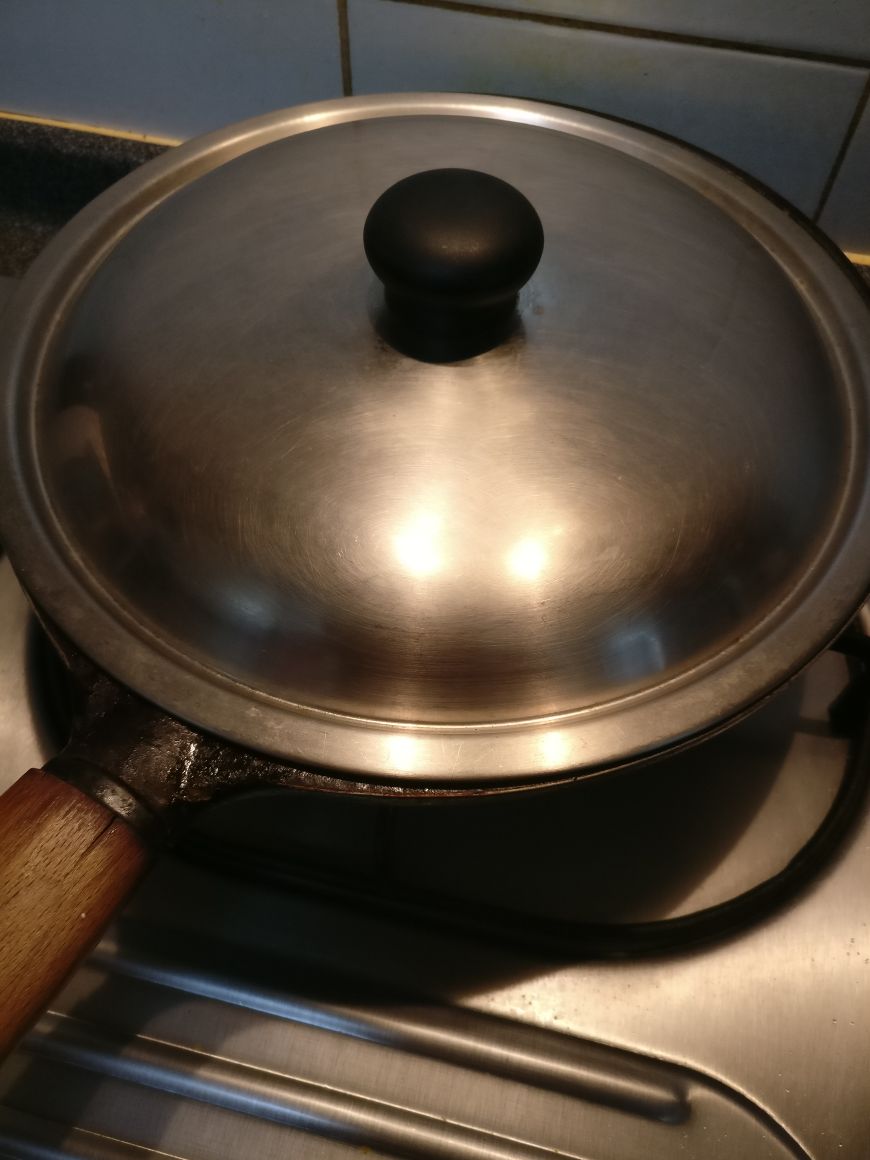
(3) Cover the pan with a lid and cook the need dosa till it is done. Make sure it does not turn brown. Do not flip the dosa.


(4) Make a triangular fold on the tawa itself as shown in the pictures and video.


(5) Then remove the dosa and place it on a plate. Make more neer dosas and place them separately and not sticking to each other on a plate.


(6) Once they are cold, they can be stacked but not when they are hot as if stacked with hot, the dosas with stick to each other and tear while taking.


(7) Here is the video of making neer dosa on a pan.


(8) Serve the neer dosas with garlic / lehsun chutney and sambar. It can also be served with any veg sagu or veg korma.


Potato Onion Sambar / Aloo Pyaz Sambar


Being a South Indian, Sambar is one of the regular recipe at my home. Atleast twice a week we prepare Sambar at home. I had shared Pumpkin Sambar earlier and now I am sharing with you all the most delicious and everyone’s favourite, Potato Onion Sambar / Aloo Pyaz Sambar. It is named so simply because we have added Potatoes and Shallot Onions in this Sambar.
This Sambar goes well with Idli, Dosas, Medu Vadas and Steamed Rice.


Course : Main
Cuisine : South Indian
Serves : 4
Time required : 10 minutes for Preparation and 20 minutes for cooking = 30 minutes.

INGREDIENTS :

For cooking dal :

(1) Tuvar dal (Arhar dal) - 250 gms
(2) 1/4 teaspoon of Turmeric powder (Haldi)
(3) 1 Tomato - chopped
(4) 2 green chilli, slit
(5) 800 ml of water
(6) Salt to taste

Vegetables added are :

(1) 2 large Potatoes (Aloo) chopped into cubes
(2) 1 drumstick, cut into smaller pieces
(3) 10 shallots / sambar onions, peeled

Spice powders added are :

4 teaspoons of Sambar powder. I used MTR Sambar powder.

For tempering Sambar :

(1) 2 tablespoon of Cooking oil
(2) 1 teaspoon of Black Mustard seeds
(3) 1 sprig of Curry leaves
(4) 1/4 teaspoon (3 pinches) of Asafoetida
(5) 2 whole red chillies

For garnishing :

Chopped Coriander leaves

PREPARATION :

(1) Rinse, peel and chop 2 large Potatoes into large cubes. 
(2) Cut the ends of the drumstick and cut the drumstick into 2 inch length pieces. 
(3) Peel 10 shallots / sambar onions.


Chopped Potatoes, Shallot Onions, Chopped Drumstick, 2 green chillies and a Tomato


METHOD :

(1) Rinse 250 gms of Arhar / Tuvar dal a couple of times in water.
(2) Put the rinsed Arhar dal in the pressure cooker.
(3) Add 800 ml of water, 1/4 teaspoon of Turmeric powder (Haldi) and, 2 green chilli (Slit) and 1 medium sized tomato (Chopped) in the pressure cooker.
(4) Add salt to taste.
(5) Cover the lid of the pressure cooker and pressure cook dal for 8 whistles on a medium flame.
(6) Turn off the gas flame after 8 whistles and let the pressure settle down on its own. Then open the lid and check the dal.
(7) The dal should be completely cooked and mushy. 


(8) Now we put the chopped Potatoes, Shallots / Sambar Onions and Drumstick into the cooked dal.


(9) Add  4 teaspoon of Sambar powder.


(10) Close the lid of the pressure cooker and pressure cook for 
1 whistle. This is enough for cooking the vegetables like chopped Potatoes, Shallots and Drumstick. Turn off the gas stove.
(11) When the pressure is released on its own, open the pressure cooker.
(12) You could have cooked the veggies by directly cooking instead of pressure cooking. That is without closing the lid of the pressure cooker, keep the pressure cooker on the gas stove and 
let the Potatoes, Shallots and Drumstick cook in dal and become tender. Do not over cook.


Tempering Sambar:

(1) Take three tablespoon of Cooking oil in a tempering ladle.


(2) Put 1 teaspoon of black Mustard seeds and let them crackle.


(3) When the Mustard seeds crackle, then add 10 - 12 Curry leaves.


(4) Immediately add 1/4 teaspoon of Asafoetida (Hing) powder.


(5) Add 2 dry whole red chillies (By breaking them). Mix well with the spoon till the Curry leaves become crisp and red chillies change colour, but do not let them burn. This will take only 4-5 seconds.


(6) Switch off the gas flame and immediately add the tempering mixture to the sambar.


(7) Add chopped Coriander leaves and Mix well. I did not have Coriander leaves and so have not added it, but have mentioned it so that my readers and follow this step.
(8) The Potato Onion Sambar / Aloo Pyaz Sambar is ready.
(9) Transfer it on to a serving bowl.


(10) The Potato Onion Sambar / Aloo Pyaz Sambar goes well with just plain steamed rice and with Idli, Dosas, Uttapam, Medu Vada and so on.


Note : I added 2 teaspoon of Sugar to the Sambar while cooking to have a mild sweetness in the Sambar. You may skip this if you don’t like.

Kairi ki Chutney / Raw Mango Chutney


Summer is a season of mangoes and arrives with the sweetest and juiciest mangoes. Mango lovers not only make recipes using ripe mangoes but also using raw mangoes. One of them is Kairi ki Chutney / Raw Mango Chutney. They can be had with any Indian snacks or just with chapatis. Raw mangoes can be combined with either onions, coconut, garlic,  jaggery, peanuts, coriander leaves, etc to form different types of chutneys. Depending on the ingredient with which raw mangoes are combined we get different tastes. I have combined raw mango with garlic and coconut to get one of the yummiest chutney. Here the coconut helps to balance the spicy and sour flavour of raw mango. If one is not finding time to cook sabji, it can be had with chapatis also.


Raw Mango / Kairi


INGREDIENTS :

(1) 1 Raw mango, deseeded and coarsely chopped
(2) 1 whole coconut, grated
(3) 6 buds of garlic, coarsely chopped
(4) 6 whole red chillies
(5) Salt to taste
(6) Water for grinding

All ingredients set together and shown below.


Cuisine : Indian
Serves :  5-8 persons
Time required : 15 minutes for preparation and 5 minutes for grinding = 20 minutes

METHOD :

(1) Take grated coconut and red whole chillies in a mixer grinder jar.


(2) Add 20 ml of water and grind them into a coarse paste.


(3) Add chopped garlic and grind once again.


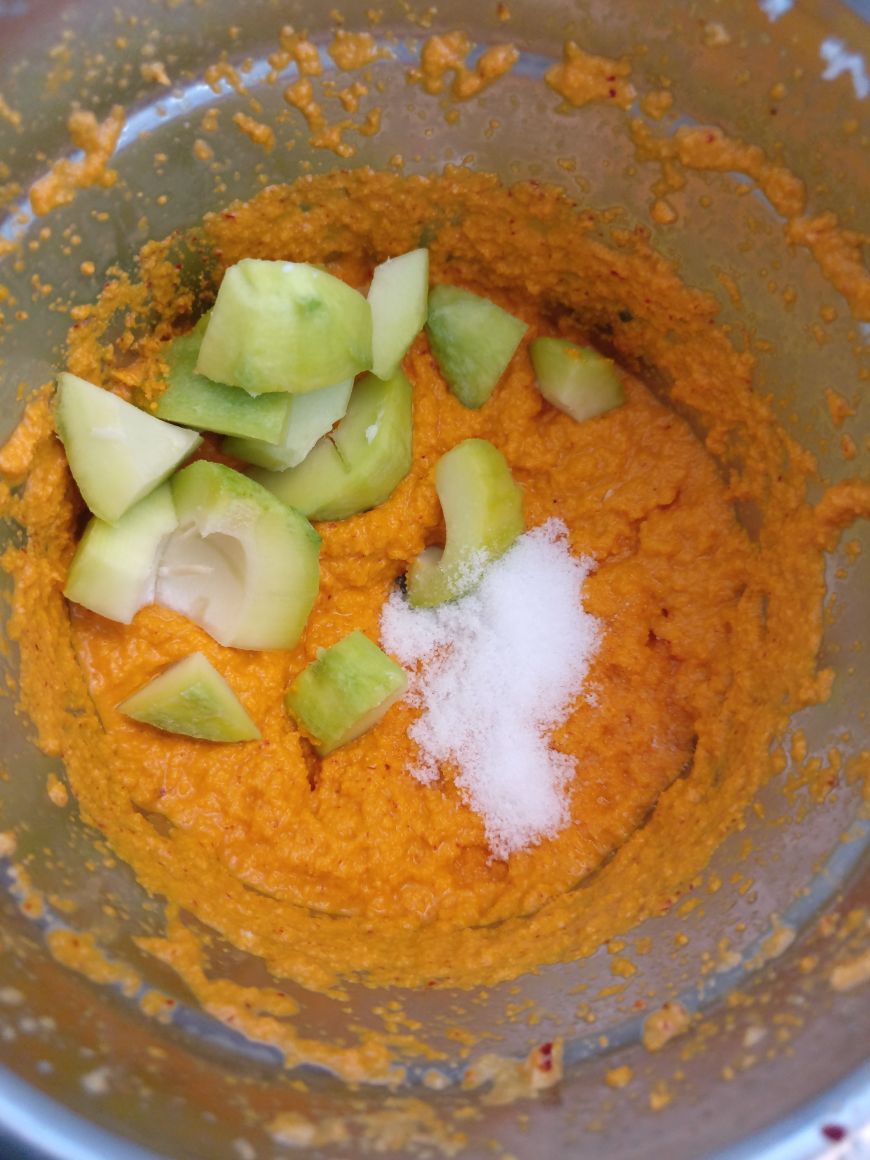
(4) Then add chopped raw mango pieces and salt as required. Grind into a coarse paste.


We have added ingredients separately so that in the last step only coarse granules of mango pieces remain and rest of the ingredients are finely grinded by the end of step 4.

(5) Transfer to a  serving bowl and store in the refrigerator and consume within 3-5 days.